
Quick Answer
Our testing of the best podcast mic for untreated rooms showed that mic placement matters as much as mic choice.
The best podcast mic for untreated rooms doesn’t need to be expensive — the Samson Q2U proves that at under $70.
For untreated rooms, dynamic microphones are the right choice — their tight cardioid patterns naturally reject off-axis reflections and room noise that condenser mics amplify. The Shure SM7B is the best overall pick. On a budget, the Samson Q2U (~$70, USB/XLR) delivers genuine dynamic mic performance without needing an interface.
When shopping for the best podcast mic for untreated rooms, look for tight cardioid patterns and high noise rejection specs.
For the best XLR option, the Rode PodMic (~$100) handles reflective rooms exceptionally well and pairs cleanly with any budget interface. Key tip: stay 6–12 inches from the mic — getting closer locks onto your voice and naturally reduces how much room makes it into the recording.
The best podcast mic for untreated rooms must reject off-axis noise — and that means dynamic mics win every time.
The best podcast mic for untreated rooms has to handle reflective surfaces without going harsh. Most podcasting advice assumes you have a treated studio, foam panels on every wall, and a closet full of clothes to record in. You probably don’t. You’ve got a spare bedroom, a living room, maybe a home office with hard floors and bare walls. You hit record, play it back, and hear yourself talking inside a tin can. That’s not a mic problem — that’s an acoustics problem. But the right microphone can make a surprisingly big difference in how much of that room actually makes it into your audio. Some mics are brutal in untreated spaces. They’re sensitive, they pick up everything, and they’ll make your echo sound like you recorded inside a parking garage. Others are forgiving — they reject off-axis noise, handle room reflections better, and give you a tighter, more focused sound even when your environment isn’t cooperating. This guide is about the second kind. We tested these mics in real, untreated rooms — not studios. Here’s what actually holds up.
Quick Picks
Best Overall: Shure SM7B
Best Budget: Samson Q2U
Best USB Option: FIFINE K688
Best XLR Option: Rode PodMic
Best Microphone for Untreated Rooms: Our Top Picks

- Tight polar pattern rejects off-axis room noise and reflections
- Built-in high-pass filter cuts low-end rumble at the source
- Two EQ switches let you shape tone without touching post-production
- Warm, natural sound that flatters most speaking voices
- Low output sensitivity means it needs a lot of gain — a basic interface won’t cut it without a CloudLifter or a preamp-strong interface like the Focusrite Scarlett 2i2 Gen 4
- XLR only — no USB option, so you’re committing to an interface setup
- Heavy enough that a flimsy desk stand won’t hold it — budget for a proper boom arm
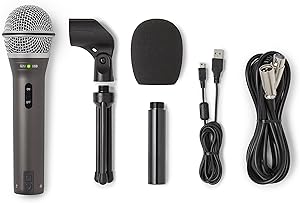
- Dynamic capsule rejects room noise better than budget condenser alternatives
- USB and XLR outputs in one mic — grow into an interface later without replacing the mic
- Built-in headphone jack for zero-latency monitoring
- Comes with a desk stand, mic clip, and both cable types — genuinely ready out of the box
- Sounds noticeably thin compared to higher-end dynamics — voices in the upper range can sound harsh
- Desk stand puts the mic in a bad position for most setups; a cheap boom arm improves it significantly
- USB audio quality maxes out at 16-bit/44.1kHz — fine for podcasting, limited for anything else

- Dynamic capsule in a USB mic is rare and genuinely valuable for untreated spaces
- USB and XLR outputs like the Q2U — interface-ready when you want to upgrade
- Tighter, more controlled sound than condenser USB mics at a similar price
- Headphone monitoring built in
- Touch-sensitive mute button can be brushed by accident when adjusting the mic
- Still sounds like a budget dynamic; don’t expect SM7B warmth
- Cardioid pattern is decent but not as tight as higher-end dynamics
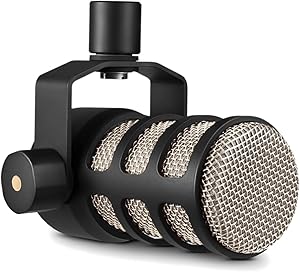
- Tight polar pattern built for voice — handles reflective rooms better than most mics in this range
- Internal pop filter lets you get close without plosive issues
- Built-in high-pass filter rolls off low-end room noise
- Warm, broadcast-style voicing that works especially well for deeper voices
- XLR only — requires an interface, no USB option
- Needs a decent preamp to shine; pairs best with a Focusrite Scarlett 2i2 or Rodecaster
- At around $100–$130, you’re committing to an XLR ecosystem as a beginner
How the four mics compare
| Mic | Type | Strength in a live room | Tradeoff | Score |
|---|---|---|---|---|
| Shure SM7B | XLR dynamic | Best off-axis rejection | Needs a preamp or high-gain interface | 9.4 |
| Samson Q2U | USB + XLR dynamic | Budget room rejection | Plastic build, basic capsule | 8.9 |
| FIFINE K688 | USB + XLR dynamic | Dynamic capsule over USB | Less detail than the SM7B | 8.4 |
| Rode PodMic | XLR dynamic | Internal pop filter, tight pattern | XLR only, needs an interface | 8.9 |
Best Dynamic Microphone for an Untreated Room
If you’re shopping for the best dynamic microphone for an untreated room, that instinct is correct. Dynamic mics reject off-axis noise by design — their tighter pickup pattern and lower sensitivity mean room echo and reflections don’t dominate your recording the way they would with a condenser.
Of the mics reviewed here, the Shure SM7B is the gold standard for untreated rooms: its internal air suspension shock isolation and hum-bucking coil eliminate rumble without requiring acoustic treatment. For podcasters wanting the same dynamic advantage at a lower price, the Rode PodMic delivers broadcast-quality rejection in a compact form designed for voice. Both mics reward getting close — 4 to 6 inches from your mouth — which further reduces the room-to-voice ratio.
If your space has hard floors, parallel walls, or little furniture, a dynamic mic positioned correctly will outperform a condenser in a professionally treated room.
How to Choose the Best Microphone for Untreated Rooms
Why Your Room Is Ruining Your Audio (And What to Do About It)
Before you blame your microphone, understand what’s actually happening. Sound travels in all directions when you speak. In a treated studio, acoustic panels and soft furnishings absorb those sound waves before they bounce back. In a bare room — hard floors, flat walls, a desk, maybe a window — those waves bounce everywhere and find their way back to your mic a few milliseconds after the original sound. That’s echo. That’s the hollow, washy quality that makes home recordings sound amateur regardless of how good the mic is.
You have two options: treat the room, or choose a mic that’s less likely to pick up what’s bouncing around it. This guide is about the second option.
Dynamic vs. Condenser: Why It Matters More Than Anything Else
This is the most important decision you’ll make when buying a mic for an untreated space, and most beginner buying guides gloss over it.
Condenser microphones are sensitive by design. They’re built to capture detail — subtle breath, room ambience, the full texture of a sound. In a treated studio that’s a feature. In your spare bedroom with bare walls, that sensitivity works against you. A condenser doesn’t just pick up your voice; it picks up your room, your HVAC system, your neighbor’s dog, and every reflection bouncing off your ceiling. Most of the affordable USB mics you’ll see recommended for beginners — Blue Yeti, HyperX QuadCast, Razer Seiren — are condenser mics. They can sound impressive in a good room. In a bad one, they expose every flaw.
Dynamic microphones are far less sensitive. They’re designed to focus on what’s directly in front of them and ignore the rest. That makes them naturally forgiving in untreated spaces. They don’t reach out and grab distant sound — you have to bring your voice to them. The tradeoff is that you need to use good mic technique (staying 6–12 inches away, speaking directly into the capsule), but the payoff is audio that sounds clean even when your room doesn’t cooperate.
The practical takeaway: for untreated rooms, choose a dynamic mic. Almost every mic on this list is dynamic for exactly that reason.
Background Noise Rejection: What to Actually Look For
Every microphone has a polar pattern — the shape of the area it listens to. For podcasting in a noisy home environment, you want a cardioid pattern. Cardioid mics are most sensitive directly in front of the capsule and progressively less sensitive to the sides and rear. That means sounds coming from behind the mic — a TV, an open window, a noisy street — get naturally attenuated before they even become a problem in post-production.
Avoid omnidirectional mics for untreated rooms. Omni patterns pick up sound equally from all directions, which is useful for recording group conversations in a controlled space and actively harmful in a room with any echo or background noise.
Some mics also include a high-pass filter (sometimes called a low-cut filter) — a switch that rolls off low-frequency rumble like desk vibration, HVAC hum, or traffic noise. It’s a small feature that makes a real difference in untreated spaces. If a mic has one, use it.
Ease of Use: USB vs. XLR
USB microphones plug directly into your computer. No interface, no extra cables, no additional gear. They’re the right starting point if you’re not ready to invest in a full signal chain, and modern USB dynamics like the Samson Q2U and K688 sound genuinely good for the price. The limitation is that you have less control over your gain, and you’re locked into whatever preamp is built into the mic.
XLR microphones require an audio interface — a small external device that sits between the mic and your computer and handles the analog-to-digital conversion. That adds cost and complexity, but it also gives you better preamp quality, more gain control, and significantly better audio headroom. If you’re serious about podcasting and you’re in a bad room, XLR with a quality interface will always outperform USB at the same mic price point.
The honest recommendation: start with a USB dynamic if you’re new. Move to XLR when you’re ready to stop compromising on sound quality.
FAQ: Best Microphone for Untreated Rooms
What’s the best microphone for an echoey or echo-prone room?
For an echoey or echo-prone room, a dynamic microphone is the single most effective fix. Its tight pickup pattern captures your voice up close while rejecting the reflections bouncing off bare walls — exactly what makes a condenser sound hollow in a room with echo. The Shure SM7B is our top pick if you have an audio interface, and the Samson Q2U is the best budget option. Pair either with close mic placement, around 4 to 6 inches, and you’ll tame most of the echo before it ever reaches your recording.
Do I need to treat my room before buying a microphone?
No — and for most home podcasters, full acoustic treatment isn’t realistic anyway. A dynamic mic with a tight cardioid pattern will handle a bad room far better than foam squares on two walls. Start with the right mic, get close to it, and treat the room later if you want to go further.
Will a more expensive mic fix my echo problem?
Not on its own. Echo is a room problem, not a mic problem — but the right mic will pick up significantly less of it. A dynamic mic like the SM7B or PodMic is less sensitive to room reflections than a condenser, so you hear less echo in the final recording. Spending more on a condenser mic in an untreated room will make things worse, not better.
Is a USB mic good enough for untreated rooms, or do I need XLR?
A USB dynamic mic like the Samson Q2U or K688 is good enough to produce clean, professional-sounding audio in a bad room. XLR gives you better gain control and preamp quality, which helps — but the capsule type (dynamic vs. condenser) matters more than the connection type. Start USB if you’re new, move to XLR when you’re ready to upgrade.
How close should I be to the microphone when recording?
6 to 12 inches is the sweet spot for most dynamic mics. Getting closer locks the mic onto your voice and naturally reduces how much room noise makes it into the recording — this is called the proximity effect. The further you pull back, the more room you let in. If your audio sounds echoey, move closer before you change anything else.
What is the best microphone for an untreated room?
The best microphone for an untreated room is the Shure SM7B if budget isn’t a concern — its tight cardioid pattern and built-in pop filter handle room reflections better than almost anything else in this price range. For most podcasters, the Samson Q2U (~$70) is the best overall value: it’s a dynamic mic that rejects off-axis room noise, works via USB or XLR, and doesn’t require a powerful preamp to drive it. Both are dynamic microphones, which is the defining factor — dynamic mics are forgiving in ways condensers simply aren’t in rooms without acoustic treatment.
What is the best dynamic microphone for an untreated room?
For an untreated room, the top dynamic microphone picks are: Shure SM7B (best overall, $399 XLR), Samson Q2U (best budget, ~$70 USB/XLR), FIFINE K688 (best USB option, ~$60 USB/XLR), and Rode PodMic (best XLR-only, ~$99). All four use cardioid dynamic capsules that naturally reject background noise and room reflections. If you can only pick one, the Q2U gives you 90% of the SM7B’s forgiveness at a fraction of the price.
Related Guides
- Best Microphone for Recording in a Noisy Apartment: What Actually Works
- Best Acoustic Treatment for Podcasters: What Actually Works
- How to Reduce Echo in a Home Recording Space Without Acoustic Panels
- Best Podcast Setup for Small Rooms: How to Record Clean Audio When Space Is Working Against You
Browse all guides in our Microphones Hub.
What type of microphone works best in an echo-prone room?
Dynamic microphones work best in echo-prone rooms. Unlike condensers, they use electromagnetic induction rather than a charged capsule, making them far less sensitive to ambient noise and reflections. A cardioid dynamic mic aimed directly at your mouth will reject most of the echo bouncing off your walls. If you must use a condenser, place acoustic panels behind your recording position and work close to the mic.
Does microphone placement matter as much as the mic itself in an untreated room?
Yes — placement can matter more than mic choice in an untreated room. Position the mic 4–6 inches from your mouth at a slight angle to reduce plosives. Record facing toward the center of the room rather than toward a wall, and keep your back to the most reflective surface. The proximity effect at close distances boosts bass and improves the direct-to-room sound ratio. Even a budget dynamic mic placed correctly will beat an expensive condenser poorly positioned in a live room.
Related reading: Focusrite Scarlett Solo Review: The Interface • Rode Wireless GO II Review: Best Wireless Mic • Focusrite Scarlett 2i2 Review: Still the Best