
The best budget USB/XLR hybrid mic does one clever thing: it plugs into your computer over USB today, then switches to XLR with an interface later — so you never have to re-buy your microphone as your show grows. In 2026 there is a second reason these mics matter: video. As podcasts move to YouTube and short-form, the mic in frame has to look and sound the part on a budget, and hybrids deliver broadcast-style dynamic sound that rejects a messy room.
This guide compares the three budget hybrids worth buying — the FIFINE K688, the MAONO PD300X, and the Shure MV7+ — for both audio-only and video podcasts. All three record clean over USB now, pair beautifully with AI cleanup, and keep the XLR upgrade path open for when you add an interface.
Quick Verdict
1. FIFINE K688 — Best overall budget hybrid. Broadcast-grade dynamic sound and over 80dB SNR for around $70, the standout value that scales with your channel.
2. MAONO PD300X — Best step-up under $120. Onboard gain, mute, and monitoring, 192kHz/24-bit capture, plus a metal build that punches above its price.
3. Shure MV7+ — Best premium hybrid. Around $249, the most polished voicing and app control, and the one that looks the part on camera.
Quick Picks
- Best value: FIFINE K688
- Best features per dollar: MAONO PD300X
- Best for video / on camera: Shure MV7+
- Already own one? Add an interface later — see do you need an audio interface?
Full Breakdown: The Best Budget USB/XLR Hybrid Mics

- USB and XLR in one mic
- Over 80dB signal-to-noise ratio
- Onboard gain, mute, and monitoring
- Records clean for video and audio
- Plastic build vs metal rivals
- Bundled accessories are basic
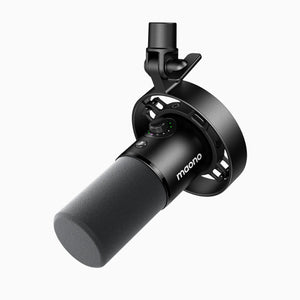
- USB and XLR dynamic, cardioid
- Onboard gain, mute, and monitoring
- 192kHz/24-bit with noise reduction
- Metal body, shock mount and windscreen included
- XLR cable not included
- Newer brand than Shure

- USB-C and XLR dynamic
- Polished broadcast voicing
- Headphone monitoring plus MOTIV app EQ
- Looks the part on camera
- Priciest of the three
- Overkill for audio-only beginners
Compare the Three Hybrid Mics
| Mic | Price | Connection | Onboard Controls | Best For |
|---|---|---|---|---|
| FIFINE K688 | ~$70 | USB + XLR | Gain, mute, monitor | Best value |
| MAONO PD300X | ~$99 | USB + XLR | Gain, mute, monitor | Features per dollar |
| Shure MV7+ | ~$249 | USB-C + XLR | Touch panel + app | Video / premium |
Why USB/XLR Hybrid Mics Make Sense in 2026
A hybrid mic solves the oldest beginner dilemma: USB now, or XLR later? With a hybrid you do both. You plug into your computer over USB today with zero extra gear, and the same mic switches to XLR the day you add an interface — so the best budget USB/XLR hybrid mic is the one purchase that grows with your show instead of being replaced by it.
The 2026 twist is video. As podcasts move to YouTube and short-form, the microphone is on camera, so it has to look intentional and sound clean in a normal room. Dynamic hybrids reject background noise and room echo far better than condensers, which is exactly what an untreated home studio needs. Pair that with AI cleanup, now standard in tools like Descript, and a hybrid recorded over USB is publish-ready for both audio feeds and YouTube. If video is your focus, see our vertical podcast setup and YouTube podcast setup guides.
Dynamic vs Condenser: Which Matters More?
All three picks here are dynamic mics, and that is deliberate. Dynamic mics capture less of the room, so they forgive hard walls, keyboard clatter, and noisy neighbors — the reality of most home setups. Condensers sound more detailed in a treated booth but pick up everything around them. For the vast majority of podcasters, a dynamic hybrid is the safer, better-sounding choice. Our USB vs XLR microphones guide breaks down the trade-offs in full.
Do You Need an Interface With These Mics?
Not to start. All three record over USB straight into your computer, so you can launch today with no interface at all. You only need one when you move to the mic XLR output — typically to add a second mic or build a studio. We cover exactly when that upgrade is worth it in do you still need an audio interface?
Frequently Asked Questions
What is the best budget USB/XLR hybrid mic in 2026?
The FIFINE K688 is the best overall value at around $70, with broadcast-grade dynamic sound and over 80dB SNR. The MAONO PD300X (around $99) is the best features-per-dollar step-up, and the Shure MV7+ (around $249) is the premium pick that looks best on camera.
Is the MAONO PD300X good for podcasting?
Yes. It is a USB/XLR dynamic with onboard gain, mute, and monitoring, 192kHz/24-bit capture, noise reduction, and a metal build with a shock mount and windscreen included — strong value around $99. Note the XLR cable is not included.
Are hybrid mics good for video podcasts?
Yes. Dynamic hybrids reject room noise and look intentional on camera, and they record clean over USB so you can publish to YouTube without an interface. Add XLR later as you grow.
Do I need an interface with these mics?
Not to start — all three record over USB. You only need an interface when you switch to their XLR output, for a second mic or a studio setup.